 Nicoli Uzun
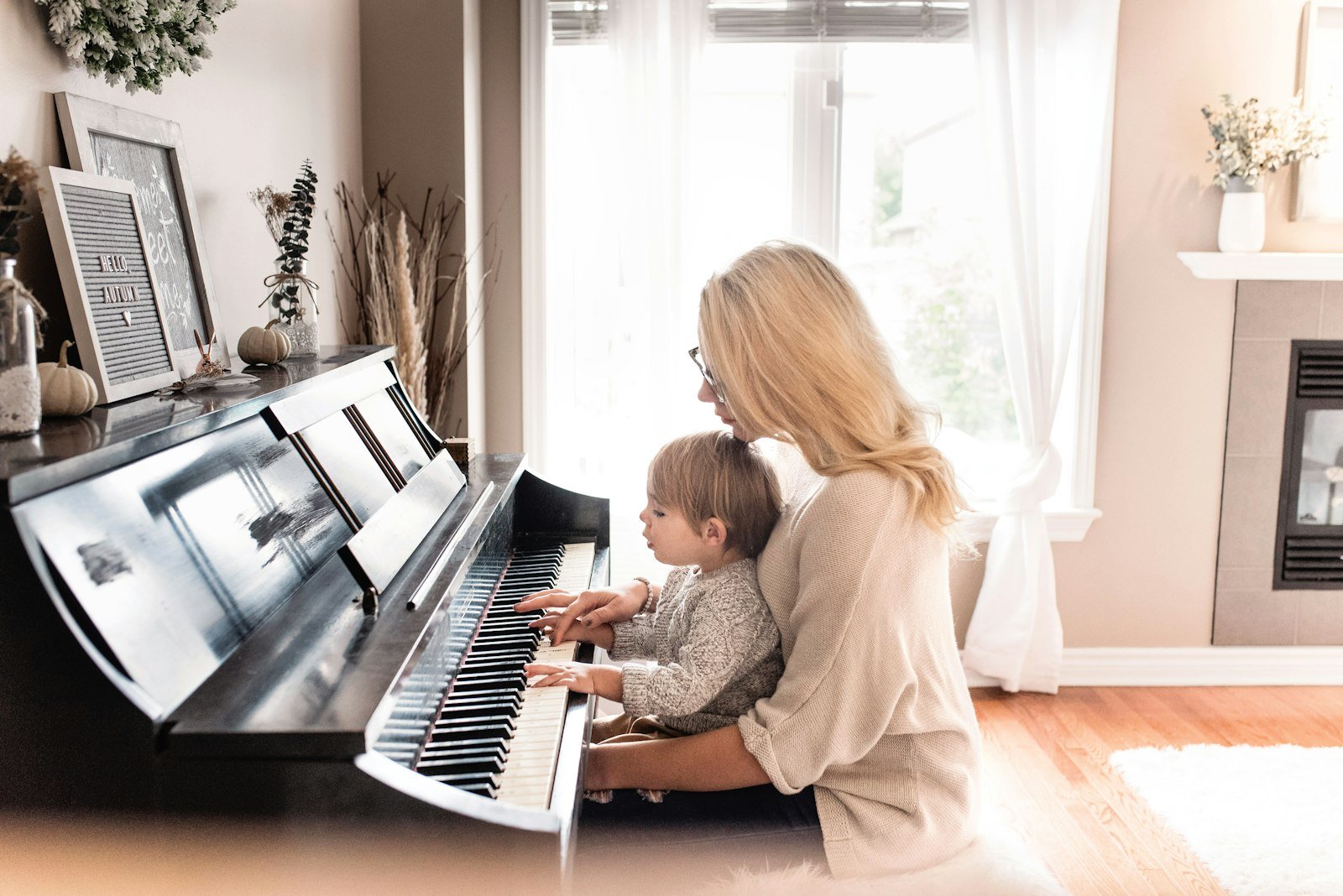
It’s one of the questions parents ask me most, sometimes almost apologetically, as if there’s a wrong answer: “Is my child too young for piano? Or have we already left it too late?”
The honest answer is less dramatic than most parents expect. There’s no magic birthday. But there is good research on what happens in a child’s brain when they start learning an instrument, and it points to something more useful than an age: readiness, consistency, and the right kind of first lessons.
Here’s what the science actually says, including the parts that don’t make it onto the cover of parenting magazines.
The short version: Musical play can start from birth. Short, playful piano lessons often work from around 4 or 5. Around 6 to 7 is a very good moment to begin more structured piano. And it’s never too late. What matters most is that the child is ready and that the learning keeps going over time.
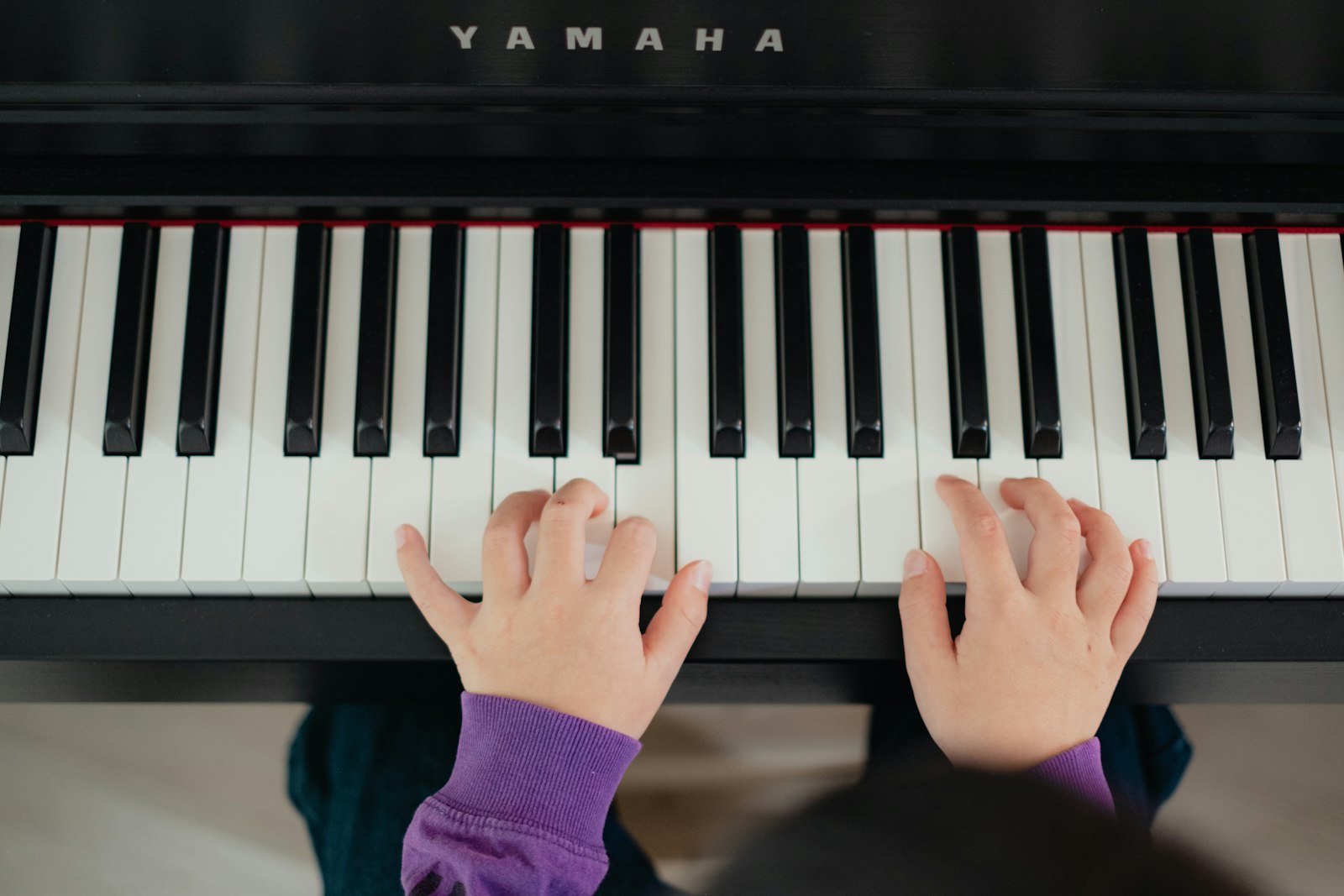
What actually changes in a child’s brain
In 2009, a team led by Krista Hyde and Gottfried Schlaug followed 31 children aged around six. Fifteen of them started weekly half-hour private keyboard lessons; the others took part in a regular school music class. The researchers scanned their brains before the lessons began and again 15 months later.
The children who learned keyboard showed measurable structural changes in the areas that control finger movement and in the auditory regions that process sound. Those changes lined up with real skills: better finger dexterity and a sharper ear for melody and rhythm. In other words, the brain was physically adapting to what the hands and ears were practising.
That’s worth pausing on. It’s not a vague promise that “music is good for the brain”. It’s evidence that, at six years old, fifteen months of lessons is enough to reshape the parts of the brain being used.
Is there a “window”? Yes, but it isn’t a deadline
A few years later, Christopher Steele, Virginia Penhune and colleagues at Concordia University compared adult musicians who had started before age 7 with musicians who had started later. Crucially, both groups had the same number of years of training and practised the same amount.
The early starters had stronger connections in a part of the corpus callosum, the bridge of fibres that lets the two hemispheres of the brain talk to each other, and the earlier they had started, the better they tended to be at a timing task that involved coordinating movement with sound. The researchers described early training as building a kind of scaffold that later learning can build on.
So yes, early childhood seems to be a particularly receptive period. But notice what the study doesn’t say: it doesn’t say people who start at 9, 15 or 40 can’t become fine musicians. The late-starters in that study were highly trained musicians themselves.
The part nobody puts on the brochure
You may have read that piano lessons will make your child better at maths, raise their IQ, or boost their school results. I’d love that to be true, but I’d rather be honest with you.
In 2020, Giovanni Sala and Fernand Gobet pooled 54 studies with almost 7,000 children. When they looked only at the well-designed studies (the ones with random allocation and a proper comparison activity), the effect of music training on general cognitive and academic skills was essentially zero. Even the Hyde study above found no jump in verbal, spatial or maths skills.
That doesn’t make music less valuable. It just means we should value it for what it genuinely does: it trains listening, coordination, memory for sound, focus, patience, and the very particular satisfaction of getting better at something difficult. And for many children, it becomes a lifelong source of joy and a way to express what they can’t yet put into words.
Why consistency matters more than the starting age
Nina Kraus, who runs the Brainvolts auditory neuroscience lab at Northwestern University, studied children in a community music programme in Los Angeles. One year of training wasn’t enough to change how their brains processed speech sounds. After two years, the difference was clear, and more hours of practice meant bigger gains.
For parents, I think this is the most practical finding of all. Starting at the “perfect” age matters far less than finding something your child can keep enjoying week after week. A child who starts at seven and keeps going will get much more out of music than one who starts at four and gives up by six.
So, when should your child start?
Rather than a single age, here’s roughly how I think about it with families:
0 to 3 years: music as play
This isn’t the time for formal piano. It’s the time for singing, bouncing to a beat, playing with sounds and simple instruments. Musical games at this age build rhythm, listening and a positive relationship with music, which is exactly what makes later lessons easier.
4 to 5 years: short, playful lessons
Many children are ready for a gentle introduction to the piano here, especially if they can concentrate on one activity for 10 to 15 minutes. Lessons at this age should feel like play, with lots of singing, movement and sound exploration, and only a little “sitting still at the keys”.
6 to 8 years: a great time for structured piano
Fingers are stronger and more independent, children can usually read simple words and numbers, and attention spans are longer. It’s the age group the keyboard study above followed, and it’s a very good moment to start more structured learning.
9 years to adult: absolutely not too late
Older children and adults often progress quickly because they understand instructions, can practise on their own, and know why they’re there. Adults, in particular, tend to be some of the most motivated students of all.
Signs your child might be ready
- They’re curious about the piano, or keep asking to “play the keys”.
- They can follow a short instruction and stay with one activity for about 10 to 15 minutes.
- They can move fingers somewhat independently (try asking them to wiggle just their “pointer finger”).
- They enjoy singing, clapping along or copying simple rhythms.
- You, as a family, can support a little regular practice, even five minutes a day.
If only some of these are true, that’s completely normal. A good first lesson will adapt to where your child is, not the other way round.
Worth watching
This short animated lesson from TED-Ed, presented by music educator and researcher Anita Collins, explains beautifully why playing an instrument works the brain so differently from simply listening to music. It’s under five minutes and lovely to watch with older children.
How I approach first lessons
My lessons are hands-on and ear-first. Children play, sing and move before they ever look at written notes, because that’s how musical understanding grows naturally. Reading music comes in when it makes sense, not as a hurdle at the start. And every child moves at their own pace.
If you’re wondering whether your child is ready, the easiest way to find out is to try. The first lesson is free, at your home in Dublin or online, in English or Portuguese.
Book a free trial lesson on WhatsApp
Sources and further reading
- Hyde, K. L. et al. (2009). Musical training shapes structural brain development. Journal of Neuroscience, 29(10), 3019–3025.
- Steele, C. J., Bailey, J. A., Zatorre, R. J. & Penhune, V. B. (2013). Early musical training and white-matter plasticity in the corpus callosum: evidence for a sensitive period. Journal of Neuroscience, 33(3), 1282–1290.
- Sala, G. & Gobet, F. (2020). Cognitive and academic benefits of music training with children: a multilevel meta-analysis. Memory & Cognition, 48, 1429–1441.
- Kraus, N. et al. (2014). Music enrichment programs improve the neural encoding of speech in at-risk children. Journal of Neuroscience, 34(36), 11913–11918.
- Collins, A. How playing an instrument benefits your brain (TED-Ed).
- Kraus, N. (2021). Of Sound Mind: How Our Brain Constructs a Meaningful Sonic World. MIT Press. And the Brainvolts lab website.